Olivia’s Reading Questions for November 13th

  1. Miranda and Adam have only known each other for ten days, but he gets the most description of both his appearance and his personality. What can we infer about Adam through how Miranda describes him? How do word choice, tone, figurative language, etc, reveal how Miranda and the author perceive Adam? Does his name offer any clues towards his character or his purpose in the story?
  2. As the story progresses, Miranda’s symptoms worsen in tandem with her disillusionment with the war. How much of her spiraling thoughts can be attributed to the fatigue brought about by the influenza? Or are her experiences throughout the day to blame for her increasing willingness to express a critical view? Is there some other reason for this change? Is it a collection of causes, or is there one prime reason for her shift in demeanor?
  3. Pale Horse, Pale Rider opens with Miranda navigating a rather disorienting dream. Pull up your favorite chaise lounge and light up a Cuban cigar(that doesn’t symbolize anything phallic, trust), because it’s Psychoanalysis Time! Whether you have studied Sigmund Freud(my condolences) or not(lucky you), this dream sequence offers up a bounty of symbolism to be dissected and analyzed!

Here are some guidelines for dream analysis from the Chicago Psychoanalysis Institute to give you a refresher on the basics of dream analysis;

  • “[Focus] on recurring symbols or themes that reflect unconscious concerns.”
  • “[Explore] emotional responses to specific dream elements.”
  • “[Connect] dream content to recent life events or long-standing conflicts.”

After reading through the first section of Pale Horse, Pale Rider, re-read the dream at the beginning, keeping in mind what we know about Miranda’s life and these guidelines as you look for connections and possible translations of the symbols in her dream. Don’t worry about strictly following the rules, have fun, and remember: when in doubt, you can always fall back on the Oedipus complex!

I have picked out some specific symbols from Miranda’s dream to give you some analysis options, but feel free to choose your own directly from the book if you wish.

Horses

  • “Fiddler or Graylie or Miss Lucy with the long nose and the wicked eye?”
  • “Now what horse shall I borrow for this journey I do not mean to take, Graylie or Miss Lucy or Fiddler who can jump ditches in the dark and knows how to get the bit between his teeth?”

House

  • “Too many have died in this bed already, there are far too many ancestral bones propped up on the mantelpieces, there have been too damned many antimacassars in this house, she said loudly, and oh, what accumulation of storied dust never allowed to settle in peace for one moment.”

The stranger

  • “And the stranger? Where is that lank greenish stranger I remember hanging about the place, welcomed by my grandfather, my great-aunt, my five times removed cousin, my decrepit hound and my silver kitten?”
  • “Ah, I have seen this fellow before, I know this man if I could place him. He is no stranger to me.”

The ride

  • “Come now, Graylie, she said, taking his bridle, we must outrun Death and the Devil
Connor’s Reading Questions for November 13th.

Hello to everyone reading this! I wanted my questions to encourage unique contemplation whilst not being too hard to answer.

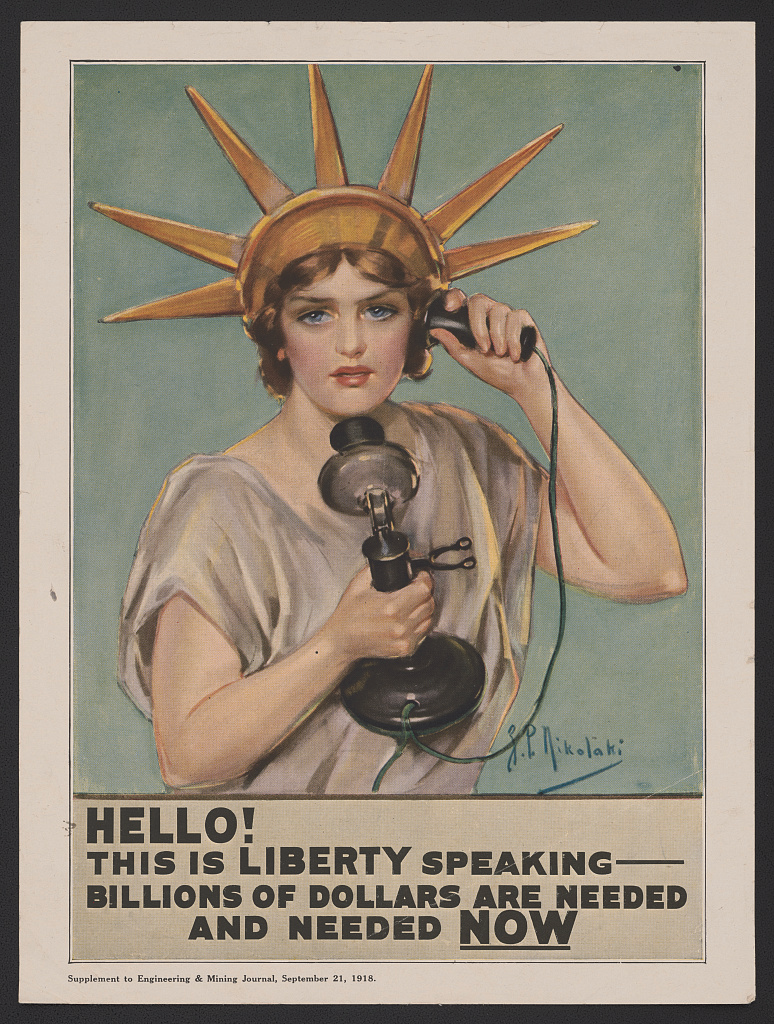
  1. How do Miranda’s inner thoughts vary from how she responds to the two men who are guilt-tripping and intimidating her into purchasing a Liberty Bond?
  2. Adam explains how the bayonet excercises at his first training camp consisted of stabbing so many sandbags and stacks of hay that he couldn’t keep track of them all. He then goes on to say that he would wake up at night “…feeling silly about it.” What kind or kinds of emotion do you think accompanied these nightly interruptions, and why?
  3. Katherine Porter began “Pale Horse, Pale Rider” with Miranda’s dream, and how she chose Graylie to “…outrun Death and the Devil.” Do you have any ideas as to what this might refer to based upon what you read within these 23 pages?

I found this poster that I had never seen before and I thought it related to the reading in multiple ways.

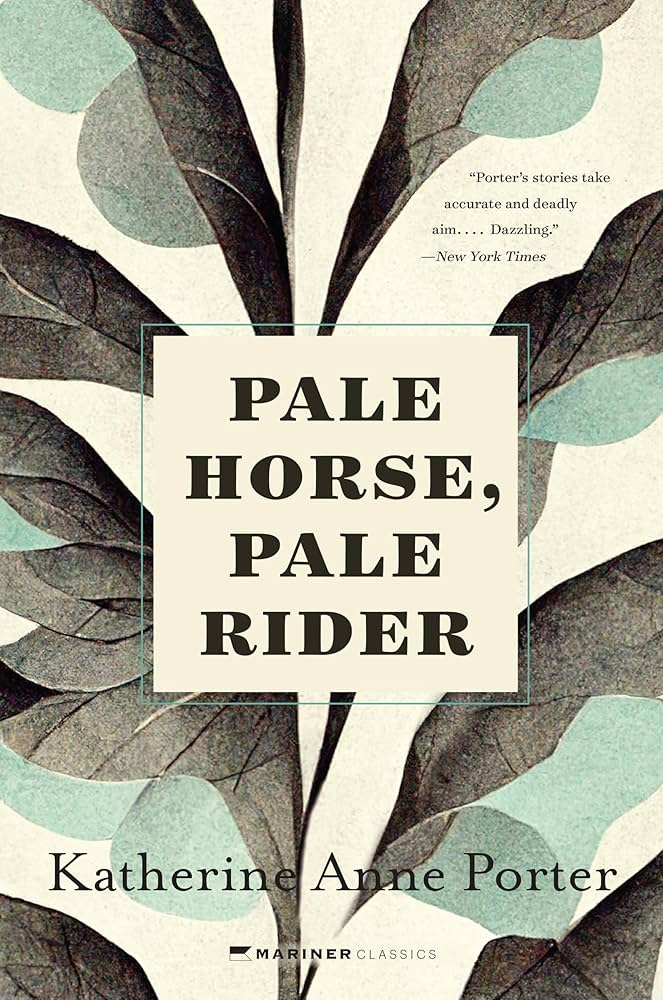
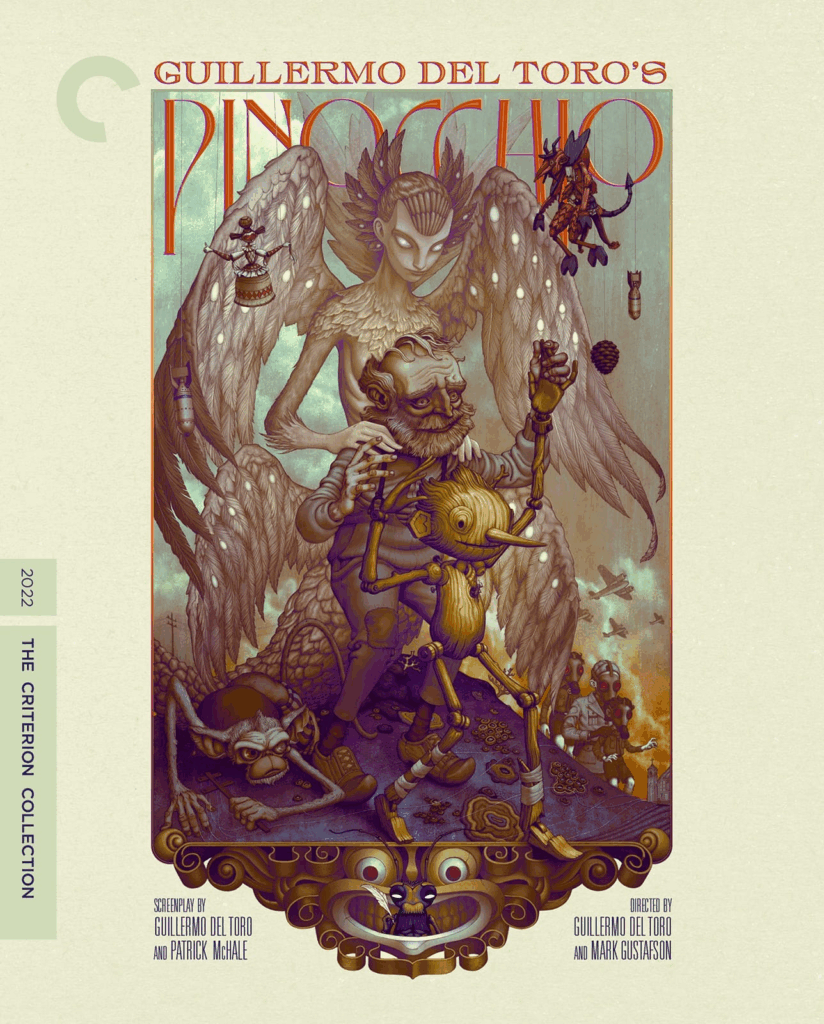
I also included an image of one of the book covers because I thought the color combination and design are interesting but go suprsingly well together.

“Talented Tenth”/Model Minority

When finishing Not Only War, the concept of the Model Minority was brought up in relation to the text and the racial dynamics that Montie and his friends experience in America. This concept goes hand-in hand with the “Talented Tenth” school of thought during the period- in the Black community. W.E.B. Du Bois supported the belief; that education could pioneer a way to combat racial discrimination and uplift the Black community. By being the educated exception and rare “10%” of the community, the superior proportion could be the “shepards” (so to speak) and herd the rest of the race to civil rights.

Montie, with Roscoe and Teddy, says that maybe White people would respect them more if they (Black men), contribute to the cause and show loyalty to the US (Model Minority). Though, this optimism is shot down by Roscoe and Teddy, as they feel they will never be respected by White people, nor can win their respect, even if they are expectional on the front lines. They claim when you get back from war, and if, you’ll be subjected to Jim Crow, harrased, and lynched-even. Further, these young men are in school too, placing education behind their name during a time when education provides status and more opportunities (Talented Tenth). Roscoe and Teddy want to “leave it to the white folk”, and focus on their betterment, like the ideology suggests.

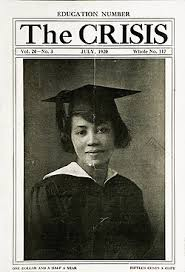
What I found ironic is how there are excerpts from The Crisis (Oldest African American publication, Du Bois helped create) right after this book. Just a thought- really interesting read. Its great to see/hear people that look like me reflected in the readings.

Private screening of All Quiet on the Western Front (2022 version).

Dear Classmates,

You are warmly invited to a private screening of All Quiet on the Western Front (2022), a powerful reimagining of Erich Maria Remarque’s seminal anti-war novel. Join us at 1900 hours on 13 November 2025 in Monroe Hall, Room 116 (lower level) for an evening of cinematic immersion and historical contemplation.

Set aside the distractions of TikTok, Rednote, and Noplace and step into a shared space of dialogue and discovery. This is more than a film—it is an opportunity to deepen our understanding of a pivotal era in global history, and to engage with peers in meaningful reflection on the human cost of conflict.

Let us gather not only to watch, but to think, connect, and honor the enduring relevance of this dramatic narrative.

Respectfully,

The Students of The Great War. 

Remembrance Day

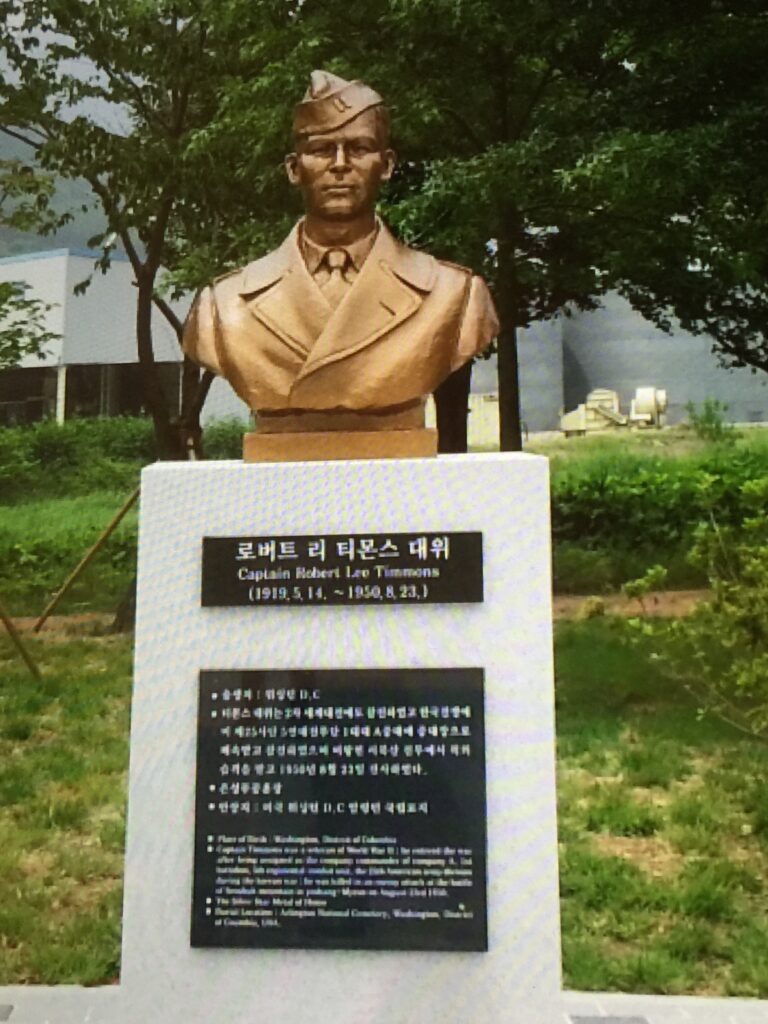
My great grandpa served in World War II and died in action in Chindong-ni, South Korea. He was a silver star general and commanded both a battalion and combat team. A statue was built in South Korea honoring him and the other men who died in battle. My dad sent me a translation in English of the inscription on the monument (Mt. Sobuk monument)

“The battle that beat North Korea soldiers so that U.N. Forces could counterattack took place here (Chong Won, Gyeongsong Province South Korea) in August, 1950. It was so fierce that Captain Timmons and a hundred soldiers died in this battle. Richard Timmons, who is Captain Timmons’ son, Korean army and citizens in this area built this monument for honoring them in November, 1995. This was designated as a memorial monument for honoring those who sacrificed for freedom of a foreign country in November, 2013.”

(The statue is from the United Nations cemetery in Pusan, South Korea. The monument was constructed on the mountain top where he and other soldiers passed)

I know our class is about WW1/The Great War, but Remembrance Day has made me reflect on what we’ve discussed in this class and connecting it to my own’s family’s history. I obviously didn’t know my great grandfather as a man, but thinking of the literature we’ve read so far, it’s raised some questions from me. His parents lived through The Great War, and he was born just a year after it ended. I wonder what his childhood was like? I wonder if he experienced the same kind of emotions and maddening thoughts that we’ve seen in so much of what we’ve read. After reading All’s Quiet, Not So Quiet, A Farewell To Arms, The Forbidden Zone, etc, I feel almost more connected to him in a way. I feel more reflective about what him, my grandfather, and my dad (all army generals), all have had to go through and experience (even though these experiences differ).

Anyways now I’m just kind of rambling, I hope this is kind of interesting.

We’re Here Because We’re Here

The feeling of entrapment, and realization that the suffering of the war was without larger purpose, is captured in a popular song from the war:

On July 1, 2016, close to 1500 volunteers, each representing one British man who had been killed on that day 100 years earlier, deployed literally silently around England, moving through modern spaces as a reminder of the presence of those dead. The video below is from Manchester, England that day. I really encourage you to watch the whole thing.

This is the caption to the video on YouTube:

‘we’re here because we’re here’ was a modern memorial to mark the centenary of the Battle of the Somme, in which around 1500 voluntary participants dressed in First World War uniform appeared unexpectedly in locations across the UK. Commissioned by 14-18 NOW (the UK’s arts programme for the First World War centenary) and created by Turner Prize-winning artist Jeremy Deller in collaboration with Rufus Norris (Director of the National Theatre), each participant represented an individual soldier who was killed on 1 July 1916. The work was partly inspired by tales of sightings during and after the First World War by people who believed they had seen a dead loved one. Covering the width and breadth of the UK, from Shetland to Penzance, participants took to the streets from 7am-7pm, visiting shopping centres, train stations, beaches, car parks and high streets to serve as a reminder to all they encountered of the 19,240 men who were killed 100 years ago the same day; the first day of the Battle of the Somme. The event stopped commuters in their tracks, with many moved to tears, and images flooded social media alongside passionate responses to the sightings of soldiers in over 900 public places across the UK. A YouGov poll indicated that 63% of the population were aware of the soldiers, including over 2 million people who saw the soldiers on the streets. The event trended on Twitter for over 14 hours and achieved exceptional media coverage, uniting all mainstream media from the Daily Telegraph to the Daily Mirror in positive coverage. There were 190 million impressions on social media, over 94,000 posts mentioning ‘we are here’ were created and TV and press coverage of the project reached an estimated 31 million people. we’re here because we’re here in the North West was led by the Royal Exchange Theatre (Manchester) in partnership with Bolton Octagon, LeftCoast (Blackpool), Oldham Coliseum and Storyhouse (Chester).

Guillermo del Toro’s Pinocchio (2022)

Hey everyone, I watched Guillermo del Toro’s Pinocchio (2022) this weekend, and admittedly, Pinocchio was one of those childhood stories I was never as familiar with. Honestly, the only version of Pinocchio I know was from Shrek, BUT after watching this film…LOVE HIMMM!

But the point of this post was that for historical context, the beginning of this film is set during the Great War… I just felt the need to share that and it is worth the watch! I also did a bit of a historical deep dive after watching the film of the original story. Please if you have any thoughts on this film or the original story, please share!

Megan’s Reading Questions for November 11th

  1. In John McCrae’s “In Flander’s Fields”, the poem encourages the reader to have faith and to remember the soldiers fighting on the battlefield. In Andrea Razafkeriefo’s version, the poem encourages African Americans who live back home to live for the soldiers who have died. Why do you think Razafkeriefo made the change to emphasize the living at home?
  2. In the WWI literature we have read throughout this semester, the narration suddenly becomes detached at the end of the story when the characters die in battle. Now we have seen this happen in “Not Only War” as well. What is the effect of this change and why do you think this ending is consistent throughout war literature?
  3. In “All Quiet on the Western Front”, Paul regains his humanity when he tries to save Gerald Duval, the wounded French soldier. Like Paul, Montie cannot bear to see Bob, his enemy, in agony. However, is Bob the one who gains empathy and human connection? If they had lived, do you think that Bob would have apologized to Montie?

Not Only War & Beneath the Perseids

Hi everyone! Since we had poems assigned for both our most recent class and the next, I thought I’d share one from another course I’m currently taking—“Beneath the Perseids” by Roger Reeves. I would be curious to hear anyone else’s opinions 🙂

“Raw cotton on the road appears as the dead
Appear in us, to us, slightly bucking

Unbidden yet called, not speaking per se
But not not speaking, their scent on our hands

Because we lifted a stone from the blood-
Less river, pressed its exile to our eye. I,

I did not want to begin with the dead,
Their urgent dust and disquisitions, their be’s

Being emperor and everywhere, but my hands,
My hands led me into the road, to pull

At the cotton matted to the fresh tar,
Forget the stars wasting themselves across the sky.

I was there for waste, for the Gorgon’s head
Held in Perseus’s hand, for the sweat

Of stars sliding across his sword, the winged
Stallion bursting forth from the Gorgon’s blood.

Blood and corpse fill the sky. Rawest cotton
Gauzes the black wounds of the screaming road. I!”

I felt that this poem aligns perfectly with our current exploration of the intersection between race and war. It not only employs vivid techniques to portray the chaos of violence—through fleeting, almost rhythmic flashes reminiscent of All Quiet on the Western Front—but also delves into the complex aftermath of racial destruction, examining how people of color must “accept” or, more accurately, “forge” peace (I use the word forge intentionally, as “find” fails to capture the active, often painful process of rebuilding after such devastation). I believe Reeves illustrates how the beauty and pain of humanity are inseparable, as moments of healing remain haunted by echoes of past brutality. Viewed through a racial lens, this tension mirrors the enduring scars of racism—violence rooted in history yet still shaping the present. In this way, I find that the poem resonates with the tragic, complex, and cautiously “hopeful” ending of Not Only War, where two men are, in a sense, forged together. This moment may reflect not only how Montie endures—and, in some ways, adapts to—the world around him, where people of color are often forced to navigate or yield to white privilege, but also how the lingering echoes of racism persist even within moments of adaptation and hope.