“Talented Tenth”/Model Minority

When finishing Not Only War, the concept of the Model Minority was brought up in relation to the text and the racial dynamics that Montie and his friends experience in America. This concept goes hand-in hand with the “Talented Tenth” school of thought during the period- in the Black community. W.E.B. Du Bois supported the belief; that education could pioneer a way to combat racial discrimination and uplift the Black community. By being the educated exception and rare “10%” of the community, the superior proportion could be the “shepards” (so to speak) and herd the rest of the race to civil rights.

Montie, with Roscoe and Teddy, says that maybe White people would respect them more if they (Black men), contribute to the cause and show loyalty to the US (Model Minority). Though, this optimism is shot down by Roscoe and Teddy, as they feel they will never be respected by White people, nor can win their respect, even if they are expectional on the front lines. They claim when you get back from war, and if, you’ll be subjected to Jim Crow, harrased, and lynched-even. Further, these young men are in school too, placing education behind their name during a time when education provides status and more opportunities (Talented Tenth). Roscoe and Teddy want to “leave it to the white folk”, and focus on their betterment, like the ideology suggests.

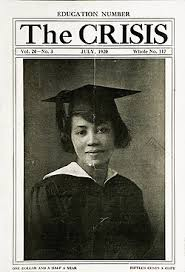
What I found ironic is how there are excerpts from The Crisis (Oldest African American publication, Du Bois helped create) right after this book. Just a thought- really interesting read. Its great to see/hear people that look like me reflected in the readings.
AQWF Thoughts From Young Black Woman

Key themes discussed in class today (9/2) were masculinity, disillusionment, authority (and abuse), and death. I read this book as a young Caribbean woman who studies global history- I notice many parallels to my ethnic and national history, and find it so interesting that these encounters seem to be novel and immediately impactful to characters like Paul and his comrades within the duration of time they spend at war.

I often speak on the Black American experience within the States and find that these same themes/struggles can still be seen today and are battled internally within Black culture. Disillusionment is one of the most apparent. Black people, at the hands of the state, endured abhorrent traumas and were eventually (and still are) institutionalized into a domestic system that doesn’t set up Black Americans for success proportionately. Although we, including myself, stand for the Pledge, have family in the military, and pay our taxes. Why do that? Does the US value us as a people? What do we gain? Have we really ever gained?

The aforementioned is important because I believe Paul and his comrades are being institutionalized during this war. They won’t be set up for success when they get out, even if they manage to escape alive. In fact, a portion of their generation will be dead from bombs, gas, and suicides. Those who aren’t in the war will claim this war is noble and “you’re doing right by your nation”. But is the nation really doing right by them? Can and will they be able to make a life for themselves after having lost limb and life? Can Germany honor that moving forward? Characters lightly refer to this dissonance after Kemmerich dies, and while the men discuss what after the war will be like.

Despite the dilemmas being very different for the two very different groups (Black Americans from enslavement to today vs. 20ish white German men during WW1), they raise the same types of questions that I shared above: “Is the nation doing right by them?”, “Is this really right?”, “Does our country value us as a people?” I hope to see how this disillusionment and these thoughts are processed.

I understand this course is not based in US history, but I find that intersectionality is critical in discussions like war and a war that involves several actors (including Black troops eventually). These are just some extremely simplified thoughts from a Black reader of AQWF.

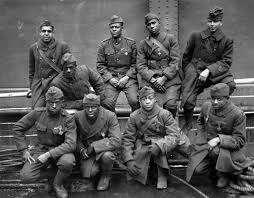
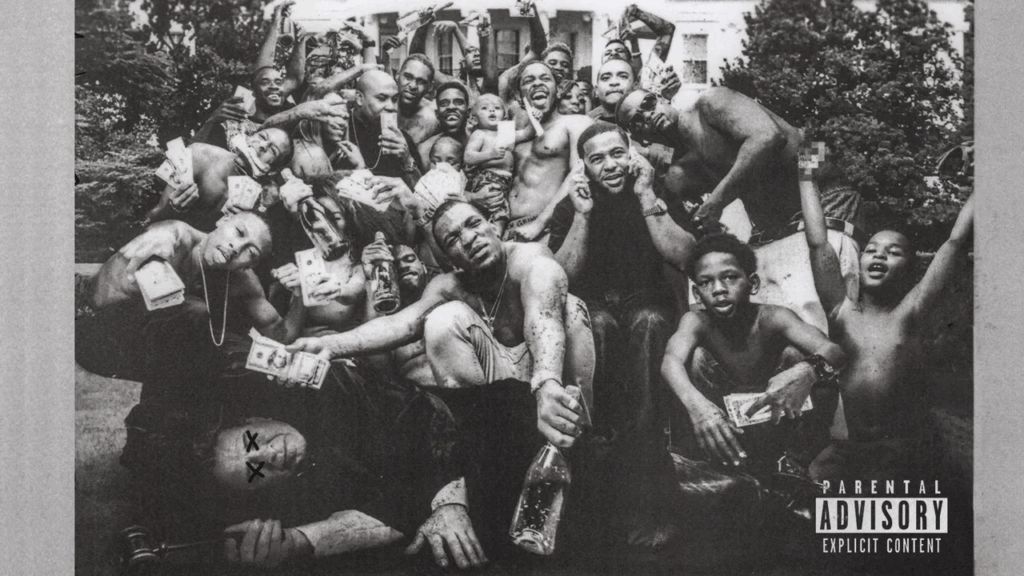
Below is an image of the Grammy-nominated album “To Pimp a Butterfly” by Kendrick Lamar. It visually speaks to the aforementioned- inclusion in the US’s culture and life, but what is the experience? This album and song “Institutionalized” does a wonderful job talking about being Black in a system that wasn’t created for you to succeed. I contrasted this image with the “Harlem Hellfighters,” who were a US Army troop that faced discrimination at home, but fought in the war. Despite them having a similar look, a lot of the sentiment in the same.