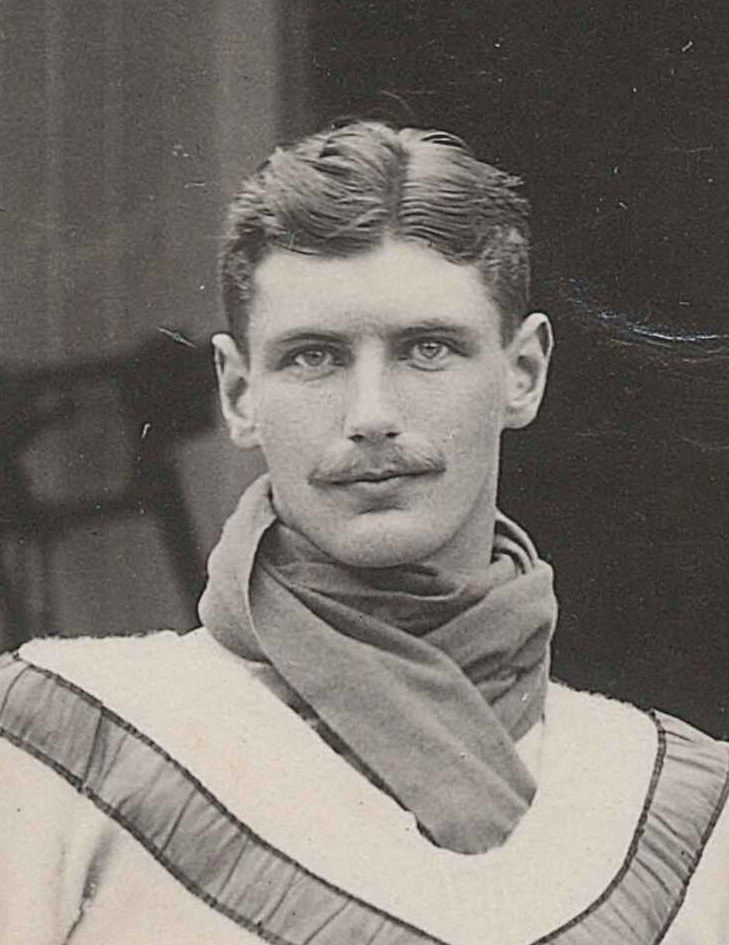
The Old Front Line is a podcast series hosted by Paul Reed. The episode I am reviewing, “Remembering the Forgotten Front,” encompasses the Allied front on French terrain, between La Bassée and Armentieres. Reed shares in broad detail the stories and battles that happen across what he calls “the forgotten front,” as the name of the episode suggests, starting from as far as 1914 to the end of the war in 1918.
Armentieres and La Bassée


“Static Front”
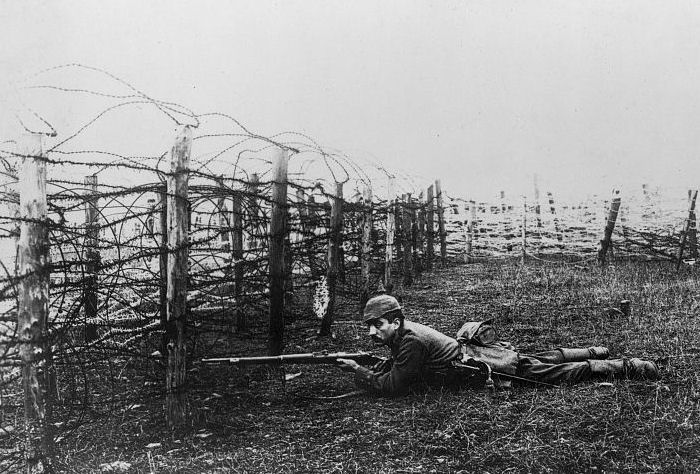
Other than in major battles such as the Battle of Loos, Reed describes this front as the “quiet, static, front” of the West, in which soldiers would study and observe the trench warfare before being thrown into the actual battle. Because it was a static front, the British set up bunkers, thinking they wouldn’t advance far on the offensive — though they achieved small breakthroughs, such as in September 1918, where they seize the City of Lille in France from German hold.
Terrain of the Forgotten Front
On multiple points within the podcast, Reed describes the trenches and elevation of the front between Armentieres and La Bassé as above ground level, so as to not be subjected to heavy flooding. This provided advantage due to its viewpoint and perspective, and was therefore desirable for the Germans. The front used Armentieres as a main route, setting up medical bays and weaponry in nearby towns and using the small rivers and waterways to their advantage.
Red Dragon Crater
Reed mentions how the land on La Bassée is suitable for tunneling due to its elevation, and that troops would dig tunnels as a battle tactic. Tunnels could collapse and fall over the soldiers using them. In 1916, the Germans blew up a mine that collapsed the tunnels and created a crater called the Red Dragon Crater. Soldier William Hackett had gone to rescue his comrades from the collapsing tunnel and sacrificed his life doing so.

Memorials, Landmarks and Cemeteries
Ploegsteert Memorial

Reed mentions many landmarks on the Forgotten Front, including mass graves and memorials for soldiers. In Belgium, the Ploegsteert Memorial (shown above) honors 11,334 British and South African men which were killed and went missing on the front for the span of the Great War (1914 – 1918).
Main Route

According to Reed, since Armentieres was considered the “main route” to the front, lots of war cemeteries can be found in this area of France now.
Lone Tree

Reed also mentions the Lone Tree, the only tree left standing on the battlefield of Loos during October 1915
Colonial Soldiers (Neuve Chapelle)

The Ploegsteert Memorial shows Britain’s inclusion of its colonies into its battles. At the beginning of the podcast, Reed mentions how Australian and New Zealand soldiers were brought in as well, from their fight in Gallipoli. Additionally, Reeds also briefly mentions the Indian Corp that went to battle for the first time at Neuve Chapelle in 1915.
The Road to La Bassée
In 1934, two WWI veterans, Bernard Newman and Harold Apthorp, return to the battlefield, return to the battlefield twenty years after the end of the war, to reflect on what they remember from their days in battle to how the land and people have changed since then. Reeds reads a small excerpt from Newman and Apthorp’s poem in his podcast.
Review
I found Reed’s detailed accounts of the different battles of the “forgotten front” to be extremely intruiging, and I could imagine well the movement of the front through his deep, descriptive imagery of both the landscape and the impact the war had left on the land, whether it be through the mine collapses, the digging of the trenches, or the building of bunkers, factories, and medical bays near the fronts of both the German and British sides. Although Reed gives way to my imagination with his voice, it became difficult to take notes of the places he described without any transcription — especially when he talks quite fast. Personally, his accent was also hard to understand, specifically when he gave the names of French battlefields and memorialized soldiers. I feel as if the information he gives his listeners would be more accessible with a transcription, so that we could comprehend and easily search up the names he provides instead of playing it by ear. I do appreciate the additional links he provided linked on his website — even if the one for the poem did not work, I was able to search up and find another source easily.
Here I have found the lyrics to The Road to La Bassée: https://www.greatwarforum.org/topic/228739-help-with-a-poem/
More info about William Hackett: https://guidedbattlefieldtours.co.uk/red-dragon-crater/