
Hello to everyone reading this! I wanted my questions to encourage unique contemplation whilst not being too hard to answer.
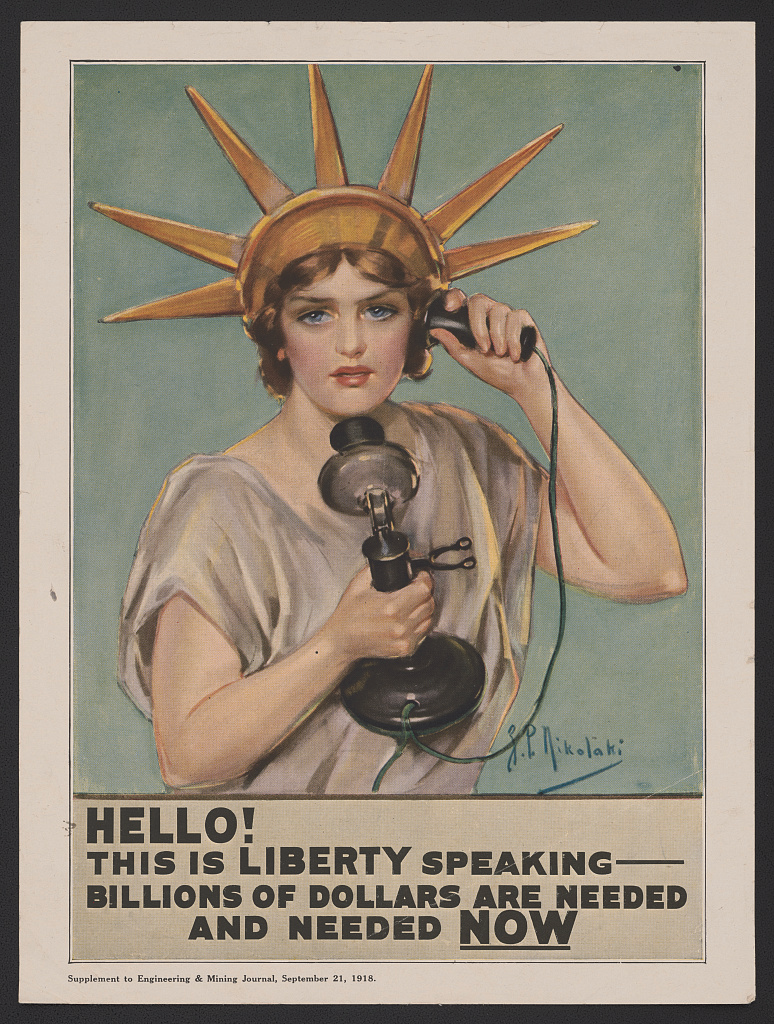
- How do Miranda’s inner thoughts vary from how she responds to the two men who are guilt-tripping and intimidating her into purchasing a Liberty Bond?
- Adam explains how the bayonet excercises at his first training camp consisted of stabbing so many sandbags and stacks of hay that he couldn’t keep track of them all. He then goes on to say that he would wake up at night “…feeling silly about it.” What kind or kinds of emotion do you think accompanied these nightly interruptions, and why?
- Katherine Porter began “Pale Horse, Pale Rider” with Miranda’s dream, and how she chose Graylie to “…outrun Death and the Devil.” Do you have any ideas as to what this might refer to based upon what you read within these 23 pages?
I found this poster that I had never seen before and I thought it related to the reading in multiple ways.
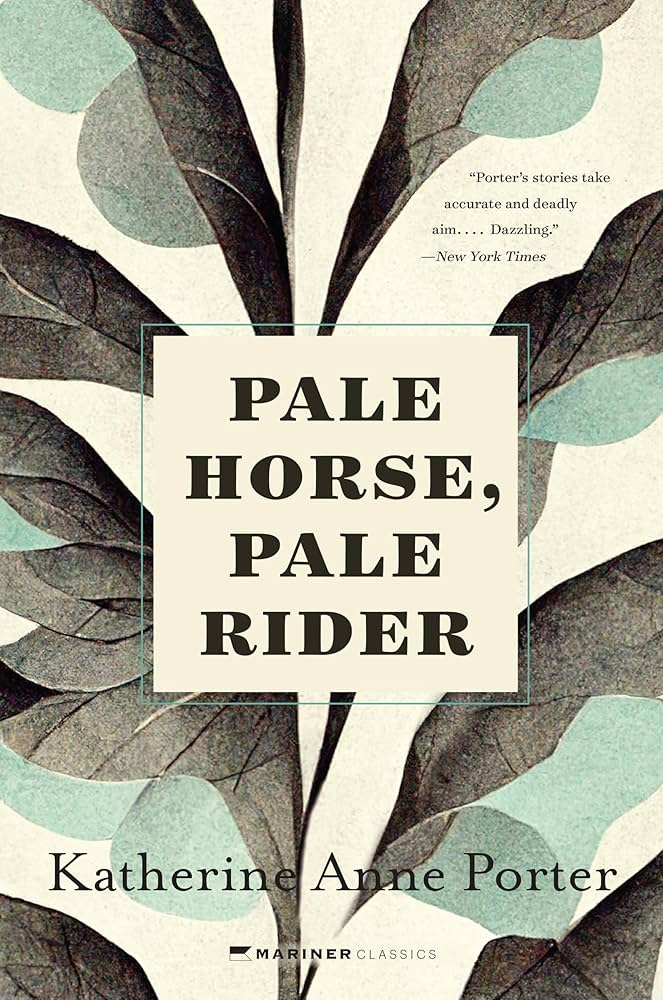
I also included an image of one of the book covers because I thought the color combination and design are interesting but go suprsingly well together.
Hi! I’d like to respond to your first question about Miranda’s inner thoughts versus her actual speech. While the two men are hounding her on why she hasn’t bought a liberty bond, Miranda repeatedly states that she simply just can’t afford one. The men condescendingly and threateningly pressure her to buy one anyways, telling her she could pay $5 a week and that she needed to pledge that she was “a loyal American doing her duty” (285). Although Miranda sticks to her story of her lack of money being the only reason that she hasn’t bought one yet, her inner thoughts prove a much different reason for this. In actuality, Miranda believes “to hell with this filthy war” and doesn’t even want to support it even if she could (285). I find it significant that she will never be able to say this out loud, because she already has to fear being fired for not having purchased a bond and if she were to reveal her true strong anti-war beliefs than she would likely be persecuted far more severely. This portion of the story was very eye-opening to me, since, while I had been aware of how much pressure there was on the home front to support the war in every way possible, seeing just how harsh and cruel people could be to those who didn’t or weren’t able to support the war was much different than just hearing about it.
Hi Connor! I really like these questions, and I wanted to focus on your last one. I think “Death and the Devil” could refer to the impending doom of both the war and influenza. The idea of the war “haunting the narrative” feels especially prevalent in this text—more so than in other novels we’ve read, where the war’s presence has already, or is in the process of, haunting the protagonists.
What I find interesting is that even in her dream state, she “drew Graylie around sharply” and “urged him to run,” making her one of the few characters who actively resists the war, even subconsciously. However, this resistance is interrupted when she wakes, and the word “war” strikes like “a gong of warning”—a reminder that she can never fully escape its presence. It’s also interesting that we sense the war circulating through the more “romantic” plot line. Even in this in-between space of war and home, the war still overpowers the domestic setting through liberty bonds and constant discussions of it. The dream, then, may function as a reflection of this suspension—a space where the war technically can’t reach, yet still manages to infiltrate.
Thank you for the questions!