
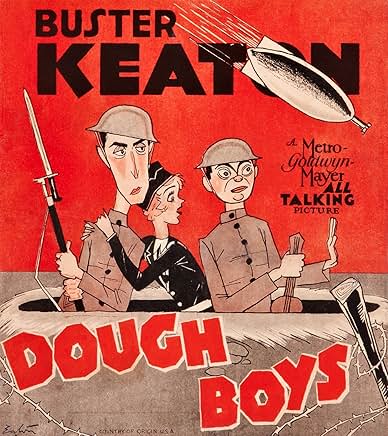
Doughboys (1930) is a surprisingly competent and all-encompassing comedy that satirizes the life of soldiers in the Great War, while also making more serious points about the real horrors that occurred during the time. It was directed by Edward Sedgewick, starring Joseph “Buster” Keaton, Sally Eilers, Cliff Edwards, and Edward Brophy. This was, for the time, an incredibly popular collection of actors, and each of them lived up to the image they would create later in their careers. It is a movie that captures well some of the emotional struggle and trauma suffered by soldiers and women on the front lines but still manages to remain lighthearted and captivating. The comedy is understandably dated, but it doesn’t suffer for it, and there is an understanding of World War I in the movies that followed relatively soon after that may not be as easily found in modern media. Doughboys captures the uncertainty, struggle, and at times even the terror of war, weaving it artfully into segments of romance and comedy that makes for a very compelling, albeit fantastical, interpretation of a soldier’s experience in the Great War.
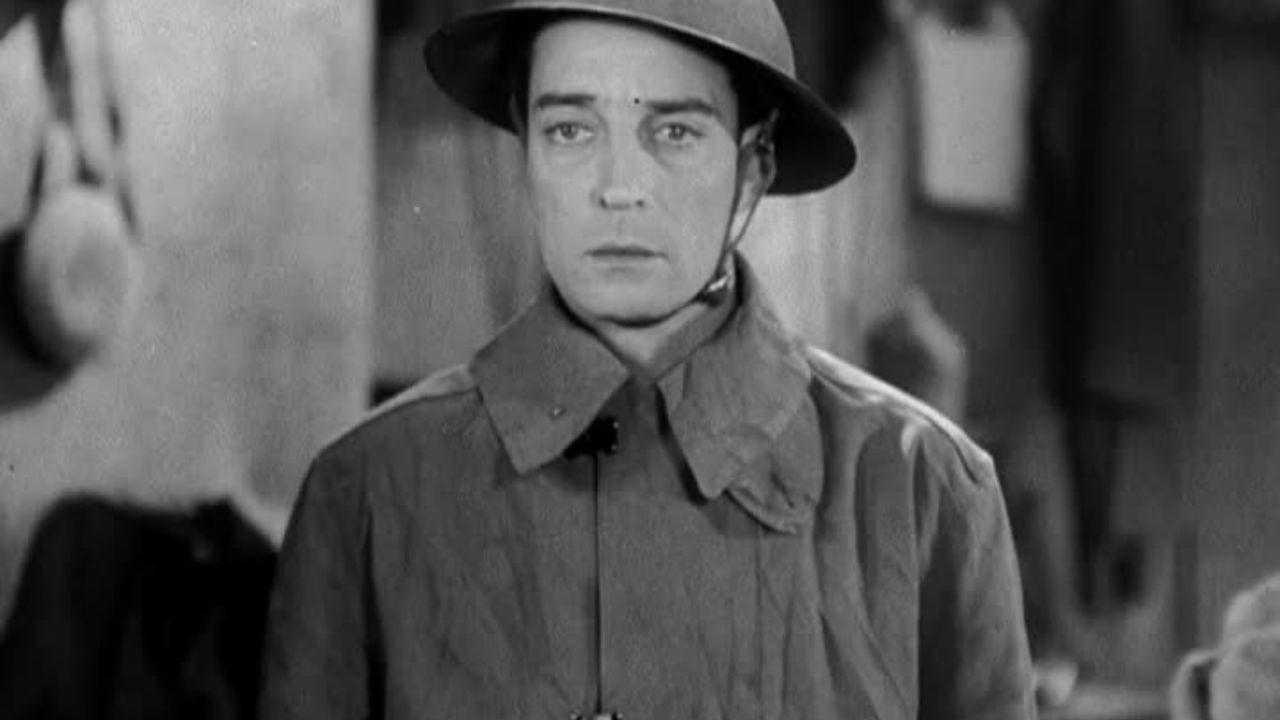
The movie is about Elmer J. Stuyvesant, a privileged, upper-class young man in love with the patriotic Mary, who refuses his advances because he sits idle during the war. In seeking to perpetuate his responsibility-free lifestyle, he ends up accidentally enlisting in the army, ripped away from his chauffeur and placed in the K Company of the army. This causes him to gain favor in the eyes of Mary, now seeing a different side of Elmer, but they aren’t able to have a relationship because of the abusive, intruding Sergeant Brophy. The Sergeant is sadistic, he takes pleasure in degrading and yelling at the soldiers in the company and tells Mary that he’ll kill any man who looks at her, despite Mary’s open disdain for him. Once they are all sent to France to support the front lines, Elmer and Mary’s friendship is strained by the war, and comedic misunderstandings. Elmer must seek help from his friend, Nescopeck, to reconcile with Mary, and attempt to survive the war as a hero. As the movie is a comedy, I most associate with Doughboys is joy; Keaton is used masterfully as the mouthpiece for witty dialogue, as well as for his lifelong talent with physical comedy. Although some of the situations depicted in the film would be otherwise off-putting, decent camera work couples with dry wit to make light of any possibly bad experiences. During some moments, however, the film does illicit some genuinely melancholic feelings; during Elmer’s arrival in France, for example, pouring rain and devouring mud symbolize the depression that is soon to overtake him.
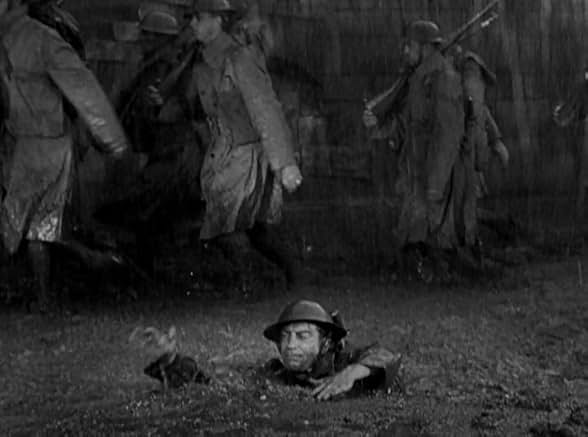
The main purpose of the movie is to entertain; it makes use of several well-known actors, specifically those who are experienced and able to convey a story through comedy. Secondarily, the purpose of the movie was to give a watered-down insight into the war to the American population. Despite being a comedy, there are moments where the harsher realities of war were made clear; the filth of trench life, the abuse from commanding officers, and the general mental torment that was suffered as a result of taking part in the war. It delivered these ideas using film as a medium, but one that was heavily influenced by vaudeville. Leading up to the movie’s release, and subsiding with the rise of motion pictures (1910’s to late 1920’s), vaudeville was an incredibly popular form of entertainment, which is where Buster Keaton’s career began. It was when he entered adulthood that he made the leap from vaudeville to acting in film, but Doughboys is a fantastic showing of all the skills he had acquired from his earlier work and used to diversify his presence in movies. The scene Doughboys is best known for is a vaudeville show put on by the army, which Elmer sneaks into; it is a display of actual dancing and burlesque, while also employing the physical and slapstick comedy Keaton was well known for. He also exercised more general creative input in the creation of the movie, using his own experience from enlistment in World War I.
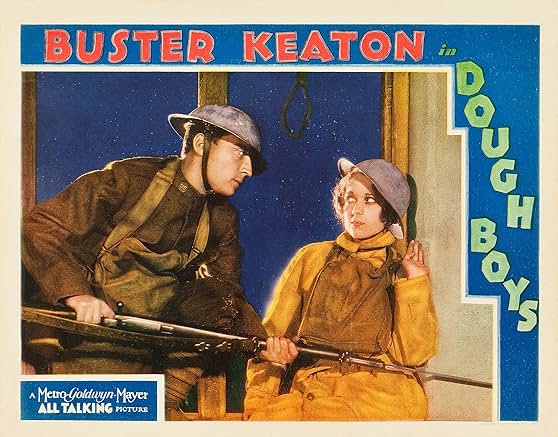
I would certainly recommend you all to watch this movie. I’m not sure if I would say the same if I was recommending it to a random person, but someone who understands the terror of war specifically in the context of WWI would get a kick out of this movie. It’s because the horror was so incomprehensible in real life and other media that this exaggeration of a grossly incompetent rich boy trying to play hero feels so refreshing. Doughboys is made more authentic by Buster Keaton influencing the dialogue based on his time in the war, so the occasional light drama and interactions between soldiers feel more genuine. Keaton’s influence also helps to highlight some of the other tropes observed in literature from the time, including some soldiers feeling that women were “traitors” as well as the disconnect between the men who fought in the war, and the men who lead the war. Doughboys is comedic, but honest, and offers surprisingly cohesive commentary on the First World War.
Thank you for reading! Here is his dance at the end of the burlesque show.