
In the first chapter, Paul talks a lot about the ages of himself and his fellow common soldiers, particularly when compared to the officers and the people who stay at home directing the war but not actually at risk of fighting in it. He and all of his closest friends are nineteen years old– this is alarming for me to think about because I am twenty years old and I still feel like a child sometimes, so I can’t imagine boys younger than me fighting and dying in such horrible conditions as there were in the trenches.
At the end of the first chapter, he says, when talking about how they were referred to as the Iron Youth: “Youth! We are none of us more than twenty years old. But young? Youth? That is long ago. We are old folk.” (p. 18). This quote sums up the point he’s been getting to the whole chapter and reminded me of something I had seen some time ago.
I had seen an article on how war (in this case it was the Second World War, so not quite what we’re studying but the point stands) ages and traumatizes the people who serve in it, even and perhaps especially the younger people. In this article were two photos of a young soldier; one was taken in 1941 on the day he went to the front and one in 1945 when he returned. The difference is astounding.
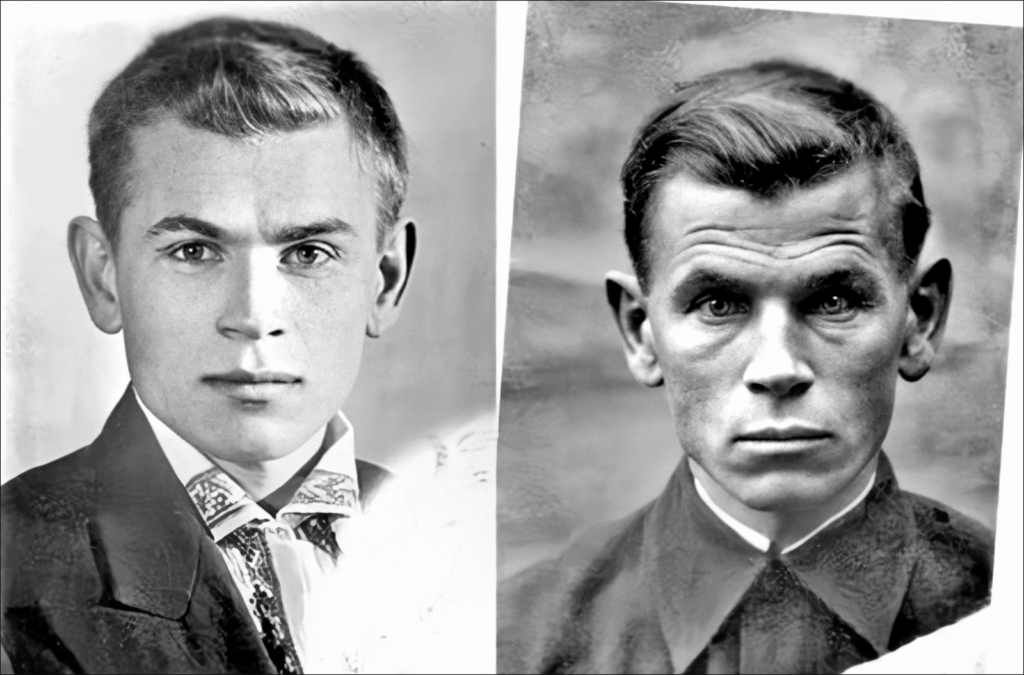
(image found at Evgeny Stepanovich Kobytev: A soldier’s face after four years of war, 1941-1945 – Rare Historical Photos, though this is not where I originally saw it as that was some time ago and I did not save it at the time.)
The quote in the book reminded me of this set of photos, and both really emphasized to me that war truly does age you. It can take young people and age them prematurely due to all they have seen and all they have had to do just to survive. I expect I will see this theme continue both in All Quiet on the Western Front and other books that we read this semester.